
Logan Davis: Blaine County needs stronger leadership with focus on planning and taxpayers’ respect
This op-ed originally appeared on 5BGazette.com.
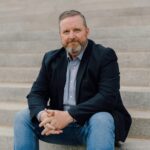
By Logan Davis, Candidate for Blaine County Commissioner
Blaine County deserves commissioners who plan ahead, listen before decisions are made, and respect the taxpayers footing the bill. Too often, the County Commission has allowed problems involving growth, public safety, and infrastructure to become crises, then turned to taxpayers to pay for the solutions.
That leaves residents facing a familiar ultimatum: pay more or risk losing essential services. Meanwhile, the needs of south county communities are too often treated as an afterthought rather than part of the county’s priorities. My experience as mayor of Carey has shown me a better way.
I’m a native Idahoan who grew up on a cattle ranch in Fish Creek and graduated from Carey High School. I worked for the Bureau of Land Management fighting wildfires before serving in the armed forces, where I specialized in security, counterterrorism, and crisis response.
Those experiences, along with my education in homeland security and counterterrorism, shaped my approach to leadership: accountability, clear information, and decisions grounded in facts rather than assumptions. As commissioner, I’ll bring that approach to serving all of Blaine County, including working families and communities too often overshadowed by the resort economy.
Carey is a small city, but our challenges are real: limited budgets, aging infrastructure, agricultural neighbors who depend on reliable services, and decisions made elsewhere that affect us.
Serving on the City Council and as mayor taught me that good government starts by listening early, understanding problems through data, and treating taxpayer dollars as a responsibility to manage carefully, not a resource to expand first and justify later. Those habits matter at the county level, too.
One example involved the Flock camera installed inside Carey city limits without input from elected officials or residents. Once we learned about it, I worked to bring the issue into the open so people could ask questions, understand the technology, and raise concerns. Government makes better decisions when people know what is being considered and why. Transparency means more than posting an agenda. It means actively involving affected communities before decisions are made.
The same principle applies to larger county issues. Growth along Highway 75, housing pressures, emergency-service demands, and transportation congestion affect our cities and agricultural communities alike. Yet south-county residents and producers have too often been heard only after decisions are moving forward.
We saw this with Idaho Power rate changes that hit ranchers and agricultural operations hard. I believe county leadership should ensure these communities have a voice when decisions affecting their livelihoods are made. The Commission represents the entire county and should bring cities, rural areas, and agricultural producers together on issues that cross boundaries.
Planning must also extend beyond the next meeting. The coroner’s office is a clear example. For years, the county depended on an arrangement involving an elected official and a private facility. A leadership change was foreseeable, yet a detailed transition plan for morgue space, equipment, staffing, and long-term costs was not in place. Predictable transitions should not become emergencies.
Across county government, we should identify dependencies on individual people, contracts, or facilities and address those vulnerabilities before they become crises.
On housing, development, and land use, I don’t believe the county should try to solve every affordability problem with more public spending. We should ensure county regulations don’t create unnecessary barriers while evaluating proposals against real impacts on water, roads, emergency services, and neighboring properties.
Private property rights deserve respect, and restrictions should be based on objective evidence of actual risks, not generalized preferences. Clear standards and reliable data protect both property owners and the public interest.
Large proposals like Blaine Crossing illustrate this: annexation decisions belong to the city involved, but the county still has a responsibility to surface transportation, emergency service, and infrastructure data early and to host conversations so affected county residents are heard.
I believe commissioners should treat taxpayer dollars with the same care families and businesses exercise with their own budgets. That means examining spending, measuring results, protecting core services like public safety and roads, and finding efficiencies before asking taxpayers for more.
It also means communicating before decisions are final and representing every part of Blaine County, not just the communities with the strongest voice.
I’m running for county commissioner because I believe practical local government experience, a willingness to listen early and often, and a commitment to long-term planning can improve how our county operates.
South county, agricultural producers, working families, and taxpayers throughout Blaine County deserve a county government that plans ahead, respects their voices, and spends their money responsibly.
Logan Davis (R), the mayor of Carey, is running for the District 1 seat on the Blaine County Board of Commissioners on Nov. 3.
 Previous Post
 Next Post